
Permanent magnet (PM) servo motors are the most widely used power components in automation equipment. However, in many projects, selection is based solely on rated torque, while critical factors—such as inertia matching, speed range, braking, encoders, drives, and filtering—are overlooked. This often leads to issues like equipment vibration, sluggish response, significant impact during start/stop cycles, and extended commissioning periods. This article breaks down the selection logic for AC permanent magnet synchronous servo motors, addressing the key technical questions most relevant to procurement.
The term “permanent magnet servo motor” typically refers to an AC permanent magnet synchronous servo motor. These motors utilize permanent magnets for excitation and operate within a closed-loop control system via a servo drive. Their advantages include a wide speed-control range, rapid response, precise positioning, and high overload capacity. Capable of handling both high- and medium-speed operating conditions, they serve as the primary drive solution for automated assembly lines, robotic arms, conveyor systems, and machining equipment. Compared to torque motors, PM servo motors are better suited for high-speed operation and applications requiring a broad speed-control range or frequent start/stop cycles. Meanwhile, coreless (hollow-cup) servo motors are designed for miniature, light-load, and ultra-high-response applications.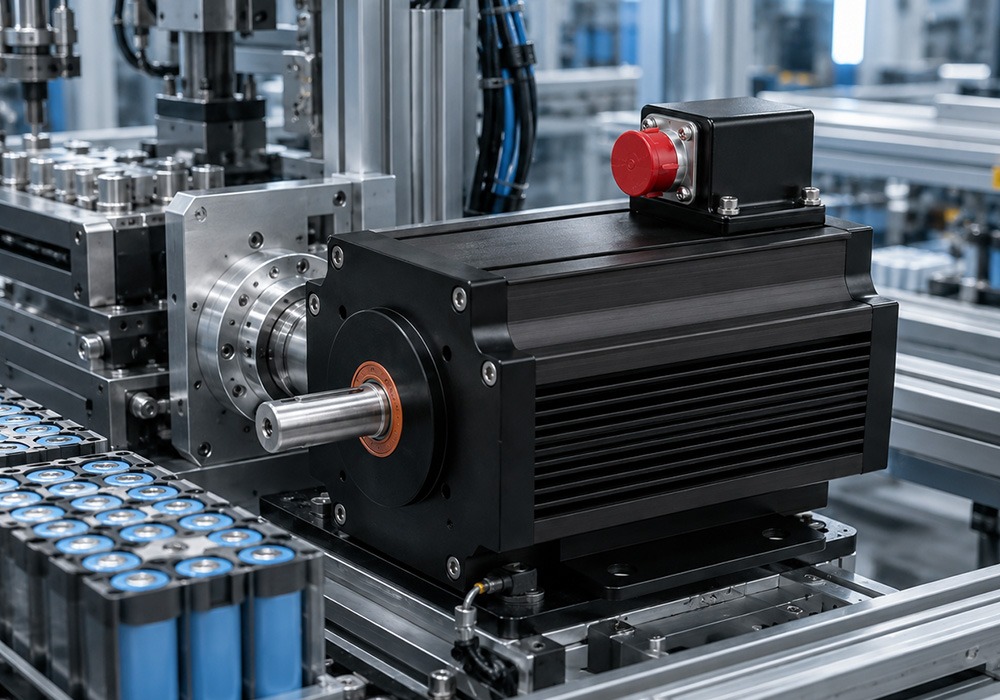
Five core technical considerations for selecting a permanent magnet servo motor:
1. Load Inertia Matching: This is the most common pitfall in servo selection. Industry standards generally recommend keeping the load inertia within 5 to 10 times the motor rotor’s inertia. Exceeding this range can easily cause system oscillation and poor responsiveness, necessitating either a larger motor or the addition of a gear reducer.
2. Torque Calculation: It is necessary to calculate both the constant-speed torque and the acceleration torque. The acceleration phase requires higher torque, which is achieved by leveraging the motor’s overload capacity; therefore, one should not focus solely on the load during constant-speed operation.
3. Speed Range: Determine the equipment’s continuous operating speed. A servo motor’s rated speed typically corresponds to its range of maximum efficiency; if the motor operates below this rated speed for extended periods, heat dissipation must be carefully considered.
4. Encoder Type: Incremental encoders are suitable for standard point-to-point positioning, while absolute encoders—which do not require a “homing” (zero-return) procedure upon power-up—are ideal for robotic arms and equipment with high safety requirements.
5. Electromagnetic Interference (EMI) Mitigation: Servo drives and cables can generate EMI during high-frequency start-stop cycles, potentially disrupting nearby sensors, cameras, or precision inspection components. In such cases, filters should be incorporated to suppress harmonics and electromagnetic noise, ensuring the stable operation of the entire system. It is common for procurement teams to overlook the need for filters, only to discover signal interference issues during the equipment commissioning phase.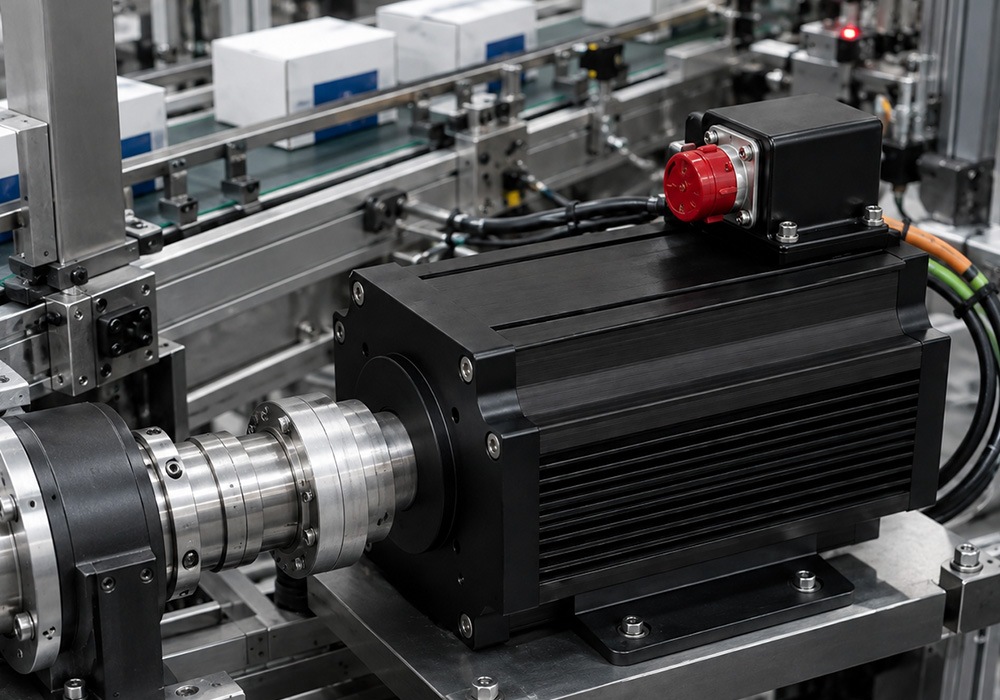
Application Scenarios:
– For assembly line conveyors, transfer mechanisms, CNC feed systems, robotic arm joints, and automated packaging equipment: AC permanent-magnet synchronous servo motors are the preferred choice.
– For low-speed, high-precision rotary positioning where a gearbox is undesirable: Torque motors are the preferred choice.
– For miniature, lightweight, high-speed start-stop, or low-noise precision instruments: Coreless (hollow-cup) motors are the preferred choice.
Chongqing Cifu Technology Co., Ltd. specializes in the in-house development and production of AC permanent-magnet synchronous servo motors and integrated electric drive units. We also develop complementary filter components, providing a one-stop solution for both servo drive and electromagnetic filtering needs. We can analyze your load specifications and motion profiles to perform inertia and torque simulations, recommend the optimal permanent-magnet servo motor, and assess whether a filter is required to suppress EMI—thereby preventing interference issues during commissioning and reducing the costs associated with R&D trial and error.