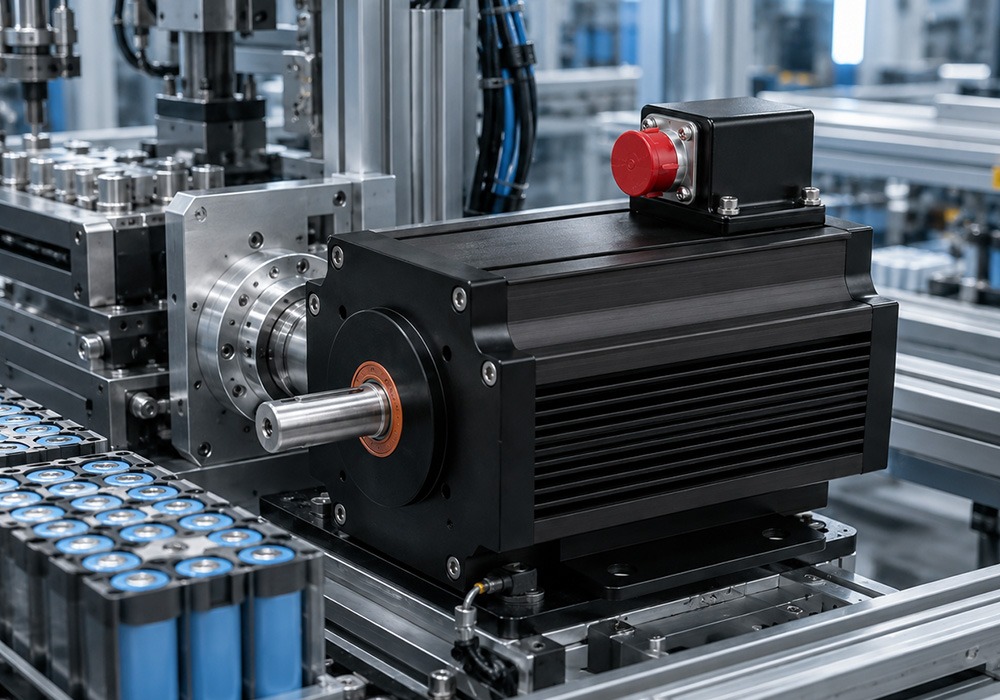
A core challenge in equipment R&D and procurement is choosing between various types of precision servo motors—such as coreless motors, torque motors, and permanent-magnet (PM) servo motors—all of which are capable of precise control. Many suppliers tend to push only the specific product categories they specialize in, rather than tailoring solutions to the actual operating conditions of the equipment. This often leads to suboptimal choices, such as “over-specifying” (using a motor far more powerful than necessary) or “under-specifying” (using a motor too weak for the required load). This article provides a comparative analysis of these three motor types—covering their characteristics, pros and cons, and operational limits—to help you clarify the selection logic and make more efficient technical decisions.
Here is a brief overview of the core positioning for each type:
✅ Coreless motors: Miniature, light-load applications; ultra-low inertia; rapid start/stop; low noise.
✅ Torque motors (frameless): High torque at low speeds; direct-drive with zero backlash; high-precision rotation.
✅ Permanent-magnet (PM) servo motors: Wide speed-adjustment range; medium-to-high power; frequent start/stop capability; suitable for both high-speed operation and point-to-point positioning—making them the ideal choice for the vast majority of automation equipment.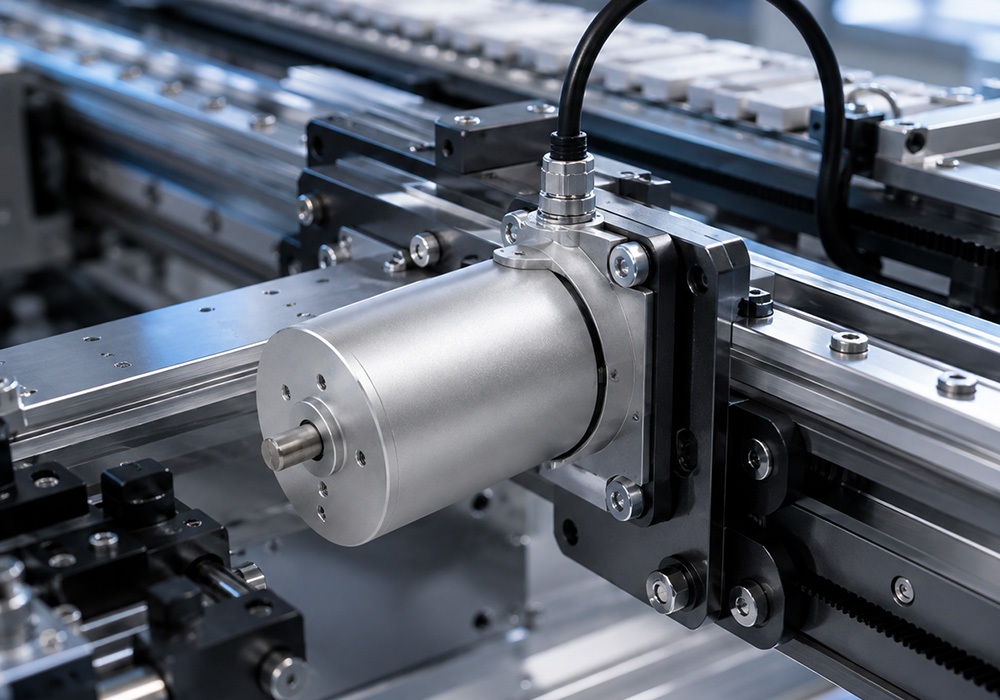
1. Moment of Inertia
Coreless motors < Torque motors < Conventional permanent-magnet (PM) servo motors. The rotor of a coreless motor is extremely lightweight, enabling millisecond-level response times for starting and stopping; this makes them ideal for light-load mechanisms that require high-frequency, rapid oscillation or quick reversals. In contrast, the rotor of a PM servo motor has a relatively higher moment of inertia, making it better suited for driving loads that possess a certain degree of inertia.
2. Output Torque Characteristics
Torque motors are designed primarily for high, continuous torque at low speeds, typically utilizing a direct-drive configuration. PM servo motors offer strong torque characteristics at high speeds but have limited torque at low speeds; achieving high torque usually requires the addition of a gearbox. Coreless motors generally produce lower torque and are suitable only for light-load applications.
3. Transmission Configuration
Frameless torque motors are predominantly direct-drive, operating without a gearbox. Coreless motors can be used in either a direct-drive configuration or paired with a miniature gearbox. PM servo motors are commonly used with both approaches.
4. Precision Characteristics
Direct-drive torque motor systems eliminate transmission backlash, offering the highest potential for ultimate positioning precision. For coreless motors and PM servo motors operating in a closed-loop configuration with an encoder, the level of precision is determined by the feedback component.
5. Cost Range
When compared at the same power rating, conventional PM servo motors offer the best price-performance ratio. Frameless direct-drive torque motor systems tend to be more expensive, while high-end miniature coreless motors also command a higher unit price than standard servo motors.