When selecting miniature drive components, many R&D engineers, procurement managers, and equipment solution providers in the automation sector often find themselves weighing the pros and cons of coreless motors. Although all are labeled “coreless motors,” there are vast differences between manufacturers in terms of power output, response speed, service life, and thermal management. Many projects have run into significant issues—such as excessive vibration during startup, overheating during continuous operation, or unstable control at low speeds—where systems that performed perfectly during the prototype debugging phase experienced soaring failure rates once deployed in mass production, ultimately delaying project timelines. To select the right coreless motor for a specific application, one must first understand its structural characteristics and then match its technical parameters to the equipment’s actual operating conditions.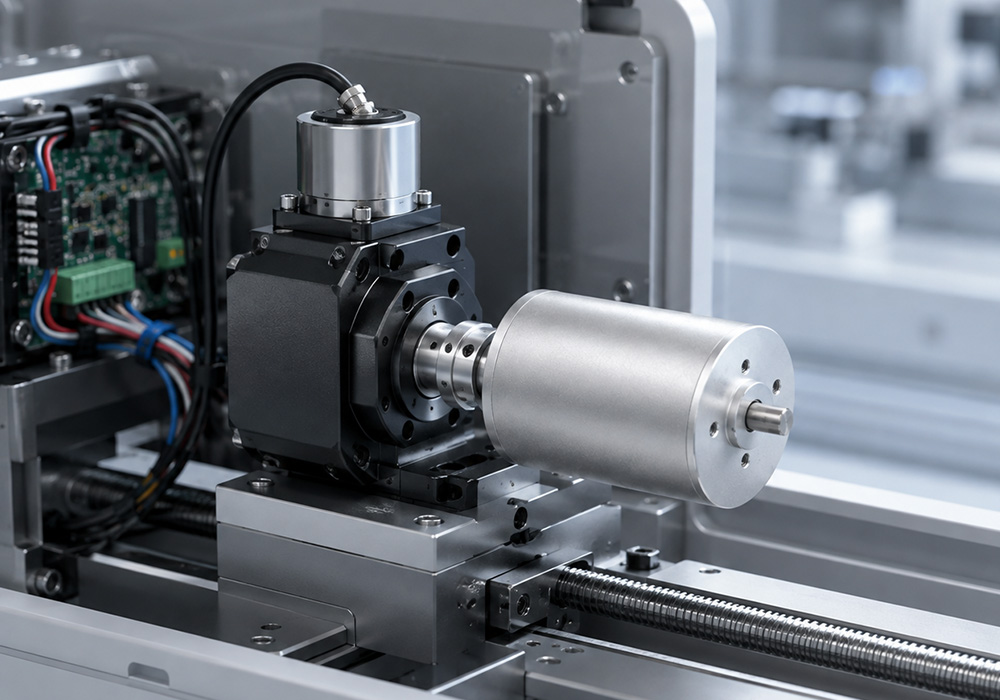
Unlike traditional motors that feature an iron core, the defining characteristic of a coreless motor is its **ironless rotor structure**. The windings are formed directly into a cup shape, eliminating the hysteresis and eddy-current losses typically caused by an iron core. This design confers inherent advantages: extremely low moment of inertia, rapid start-stop response, the absence of cogging torque, quiet operation, and higher energy conversion efficiency. Furthermore, their compact size and lightweight nature make them ideal for intelligent equipment where space and weight are strictly constrained.
However, coreless motors are not a universal solution; they have clear limitations. They possess a limited capacity for continuous loading, making them unsuitable for long-term, heavy-duty applications. Additionally, they require a well-matched drive system—a subpar driver will fail to harness the motor’s full performance potential. When selecting a motor, we prioritize the following core parameters:
1. Rated Torque vs. Peak Torque: Rated torque represents the torque a motor can output stably over long periods. Peak torque is intended only for short-duration, high-load (impact) conditions; it must never be used as the basis for continuous load design.
2. No-Load Speed and Rated Speed: Coreless motors offer a wide speed range, with many models capable of high-speed operation. It is essential to distinguish the upper limit for continuous operation to prevent demagnetization caused by excessive speed.
3. Voltage Rating: Low-voltage DC versions are standard. Most automated equipment and portable smart devices utilize 12V/24V power supplies; the motor’s voltage must align with the overall system’s power architecture.
4. Feedback Mechanism: Options include open-loop (no feedback), Hall-effect feedback, and closed-loop encoder feedback. Applications requiring precise positioning or stable rotational speed must utilize a closed-loop encoder system.
5. Ingress Protection (IP) Rating: Standard indoor equipment typically requires an IP40 rating. For environments exposed to dust or moisture, custom protective structures must be specified in advance.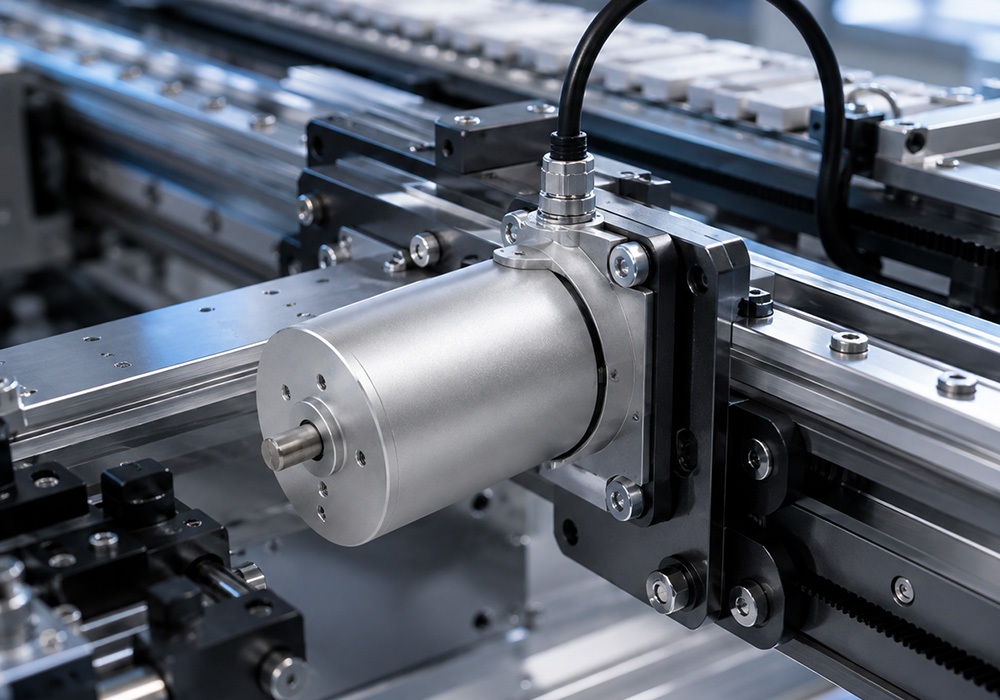
Coreless motors are ideally suited for applications such as precision inspection instruments, smart medical devices, optical gimbals, small robotic joints, portable smart actuators, and precision automated positioning components. Conversely, for heavy-duty conveying systems or equipment subject to sustained, heavy loads, coreless motors may not be the optimal choice; in such cases, torque motors or permanent-magnet servo motors are more appropriate.
Chongqing Cifu Technology Co., Ltd. is a technology enterprise integrating R&D, design, manufacturing, and consulting services. We specialize in the development and production of various precision motors and filter components. Our product portfolio includes coreless motors, torque motors, permanent-magnet servo motors, frameless torque motors, and integrated electric drive motors, designed for a wide range of intelligent equipment. Our technical team can help you select the ideal coreless motor based on your equipment’s load profile, installation space, precision requirements, and duty cycle. We also provide guidance on drive system compatibility and assist with prototype testing, helping to mitigate the risk of failures during subsequent mass production and deployment. If you are looking for coreless motor drive solutions for intelligent equipment, please provide your operating parameters to receive a tailored selection proposal.